
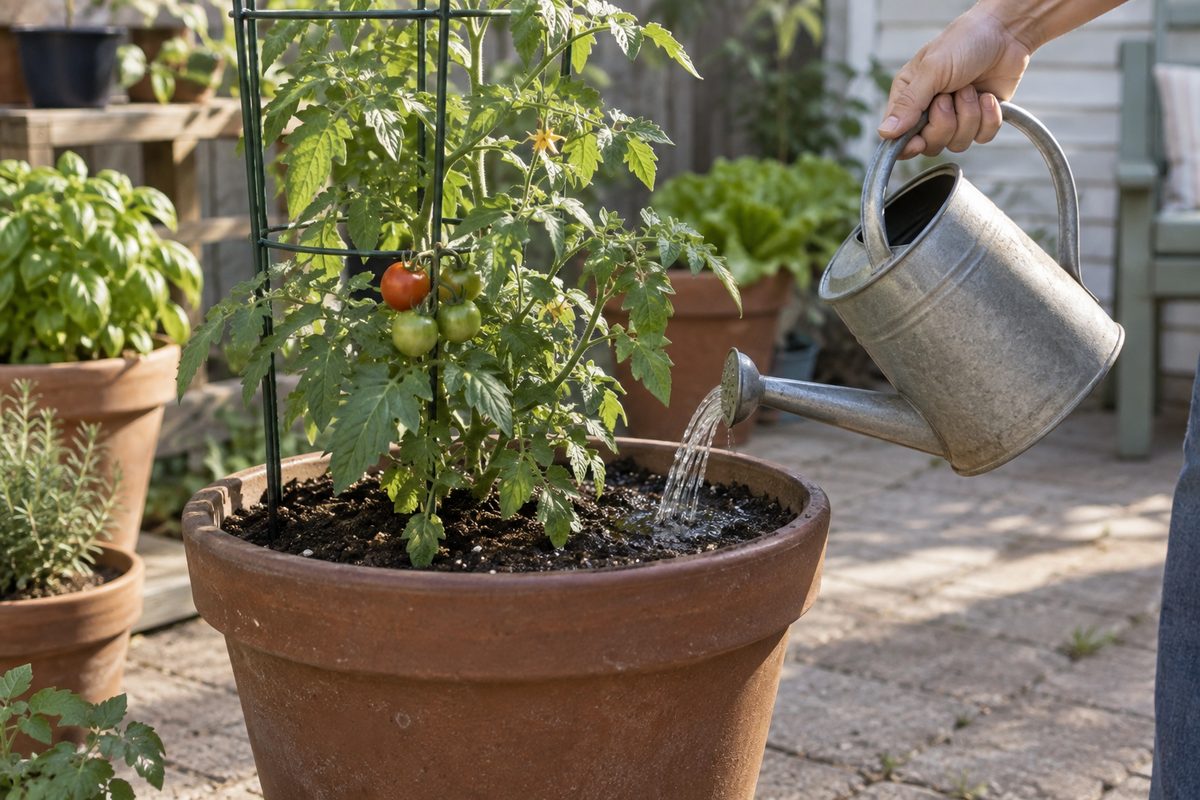

Pots in the same garden can dry at different rates, leaving you with a decision each time you reach for the watering can. A daily reminder can prompt a check, but the mix around each plant’s roots tells you more about whether it needs water.
Check just below the surface near the roots, then water or wait according to the moisture there. The checks below help you make that decision and work out what wilting or unusual drainage might mean.
Check The Mix Before Watering
Feel the mix just below the surface in one or two spots. Check gently, especially when roots fill the pot. Look near the root area rather than at one set depth; shallow planters and deep pots hold moisture differently.
For a small pot that is safe to lift, compare its weight after watering and draining with its weight as it dries. A lighter pot is another clue, but it does not show whether every part of the mix is dry. A moisture meter can add a reading; follow its instructions and remember that it measures only where the probe enters.
Water Slowly Until The Root Area Is Moist
Use a container potting mix and a pot with open drainage holes. Our guide to Potting Mix And Drainage For Container Vegetables covers that setup.
When the mix near the roots is dry, pour slowly across the surface around the plant. Pause to let the water soak in, then repeat if needed until the root area is moist and excess water drains from the bottom. If water runs straight out while the inner mix stays dry, it may be slipping through a gap where the mix has pulled away from the pot wall. Slow the stream and inspect the gap before continuing.
After an ordinary pot drains, empty its saucer so it does not sit in collected water. A self-watering planter has a separate reservoir and may use a different refill method; follow the instructions for that model.
Read Wilting And Drainage Together
Wilting can accompany dry mix, excess moisture, or hot weather. Check the mix and drainage before deciding what to do.
| Observation | Useful Check | Response |
|---|---|---|
| Wilt with dry mix below the surface | Check another spot and make sure drain holes are open | Water slowly, pause between passes, and let excess drain |
| Wilt with wet mix below the surface | Look for blocked holes or standing water in an ordinary saucer | Hold off on watering, empty the saucer, and inspect drainage |
| Dry surface over moist mix | Feel below the surface instead of judging by color | Wait; the lower mix still holds moisture |
| Wilt in hot weather while the mix is moist | Check the pot’s sun and wind exposure | Do not add water on wilt alone; reduce harsh exposure where practical and check again as conditions ease |
Adjust Checks As Conditions Change
Pot size, material, location, weather, and plant growth all affect how quickly the mix dries. Recheck after changes in rain, heat, wind, or plant size, and use each container’s conditions to decide when to inspect it.
Keep A Short Watering Log
A few notes can reveal how a particular pot responds to its location and changing conditions. Record the conditions, what the mix feels like below the surface, what you did, and what should prompt the next check. Keep separate entries for pots in different locations.
| Conditions | Mix Check | Action | Next Check Trigger |
|---|---|---|---|
| ___ | ___ | ___ | ___ |
| Rain; pot beneath a balcony overhang | Dry below the surface | Watered in slow passes and let it drain | Check the pot after the next rain; the overhang may block it |
| Hot, windy afternoon; mature tomato | Moist below the surface despite midday wilt | Held off on watering and reduced harsh exposure | Check again as the heat and wind ease |