
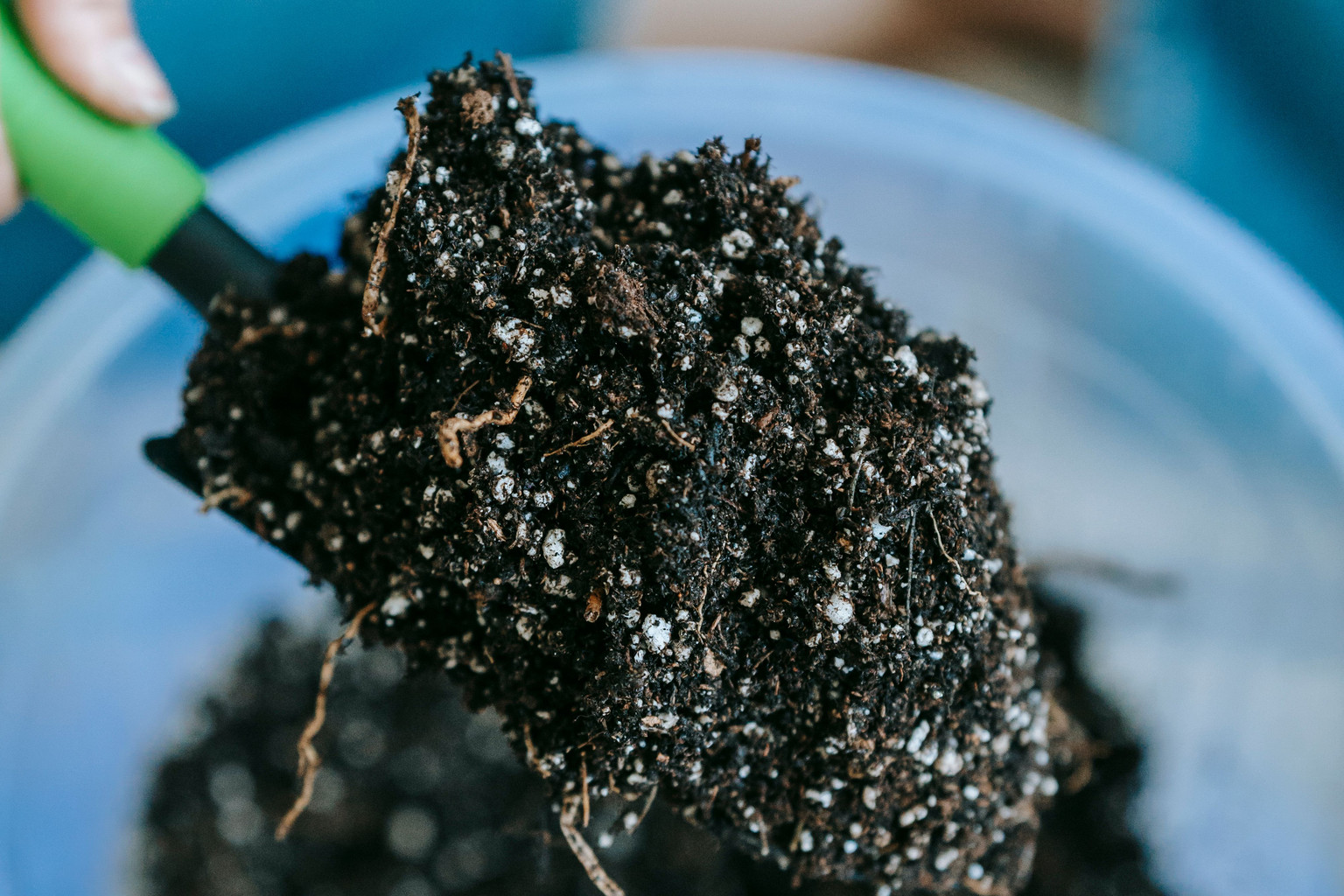

If you are making your own potting mix, a repeatable batch starts with a recipe suited to your containers. This guide helps you check the materials and measure the stated volume ratio with one vessel and fill mark, so you can scale the batch without changing its proportions.
The example here comes from Oregon State University Extension’s May 2019 newsletter: equal volumes of garden loam, compost, and perlite. The author describes this soil-containing mix as a minority approach, limits the loam to moderate-to-low clay, and excludes heavy clay (OSU Extension’s vegetable-container mix example, page 3). It is a limited option for ordinary outdoor vegetable containers with drainage.
Check That The Materials Fit
The loam limit is qualitative. The newsletter gives no numeric clay cutoff or quick home test, so a guessed threshold or visual check cannot confirm that a soil fits. Use suitable finished compost from a reliable source, and review available pH and soluble-salt information. A dark, earthy appearance alone does not establish its maturity or quality (compost-quality and potting-mix guidance).
If you cannot establish that the loam or compost is suitable for this use, pause this recipe and get local Extension or supplier guidance, or choose a labeled container mix. For a general starting point, see Potting Mix And Drainage For Container Vegetables.
Reservoir planters have separate requirements. Follow the exact model’s manual; see How To Set Up And Use A Reservoir Planter before adapting any container-mix advice.
Prepare The Components Before Measuring
Read each material’s handling and preparation directions, including dust precautions. Prepare the components as their labels or supplier instructions direct. If a required step conflicts with another instruction or cannot be established, pause before batching and get clarification.
Don’t add a sterilizing step or fixed water dose from a different recipe. If a component’s own directions call for moisture, follow them. Water used for handling is not a fourth structural part of the 1:1:1 ratio.
Measure The Ratio And Scale The Batch
For this hypothetical batch, plan to measure 9 liters of ingredients in total before mixing. There are three equal parts, so 9 liters ÷ 3 = 3 liters per ingredient. Use the same accurately marked 1-liter vessel for all three prepared ingredients, filling to the same mark each time. Keep the fills loose and consistent; don’t press one ingredient down while leaving another unpacked.
| Ingredient | Parts By Volume | Amount To Measure | 1-Liter Fills |
|---|---|---|---|
| Garden loam | 1 | 3 L | 3 |
| Suitable finished compost | 1 | 3 L | 3 |
| Perlite | 1 | 3 L | 3 |
| Total | 3 parts | 9 L before mixing | 9 fills |
Those 9 liters are the ingredient volumes measured separately. They do not guarantee 9 liters of mixed or settled potting mix, or establish that the batch will fill a 9-liter pot. Record the amount you actually have after mixing. For container volume and bag estimates, see How To Estimate Potting Mix For Your Containers.
For another batch, a different vessel can measure the relative parts if it holds the same volume each time. Only assign it a liter value if that volume is known. Equal volumes are not equal weights, and the example gives no basis for ingredient substitutions.
Mix The Measured Ingredients
Use a clean tub with room to turn the ingredients. Add the measured components and fold from the bottom until no obvious pockets of separate ingredients remain. That visible check helps with mixing; it does not establish safety, pH, or plant performance.
Make Amendment Decisions Separately
The 1:1:1 ratio sets the bulk volumes; it does not tell you whether a batch needs lime or fertilizer or what rate fits your crop. The newsletter mentions optional amendments, but those suggestions do not establish your materials’ pH or a crop-specific product rate. This mix also does not guarantee season-long feeding.
Before adding an amendment, confirm the material and crop need and follow the product directions. Fertilizer instructions can depend on the crop and its growth stage (container-plant feeding guidance). Don’t use a fixed scoop, whole-bag dose, or schedule copied from another mix. If a needed amendment has no applicable direction, pause before using the batch and get local Extension or supplier guidance.
Keep A Simple Batch Card
Record enough to repeat the measuring method and distinguish the plan from the result:
- Source And Use: OSU’s May 2019 example; ordinary outdoor vegetable container with drainage.
- Materials And Suitability: each ingredient’s source and preparation directions; how the loam’s clay suitability and the compost’s finished condition and potting suitability were established.
- Planned Measures: 1:1:1 by volume; 3 liters per ingredient; 9 liters measured separately before mixing; three fills per ingredient and nine total with the same marked 1-liter vessel.
- Amendments: record only a need and amount supported by the actual material, crop, and applicable product directions.
- Observed Result: the quantity actually measured after mixing and the date mixed.