
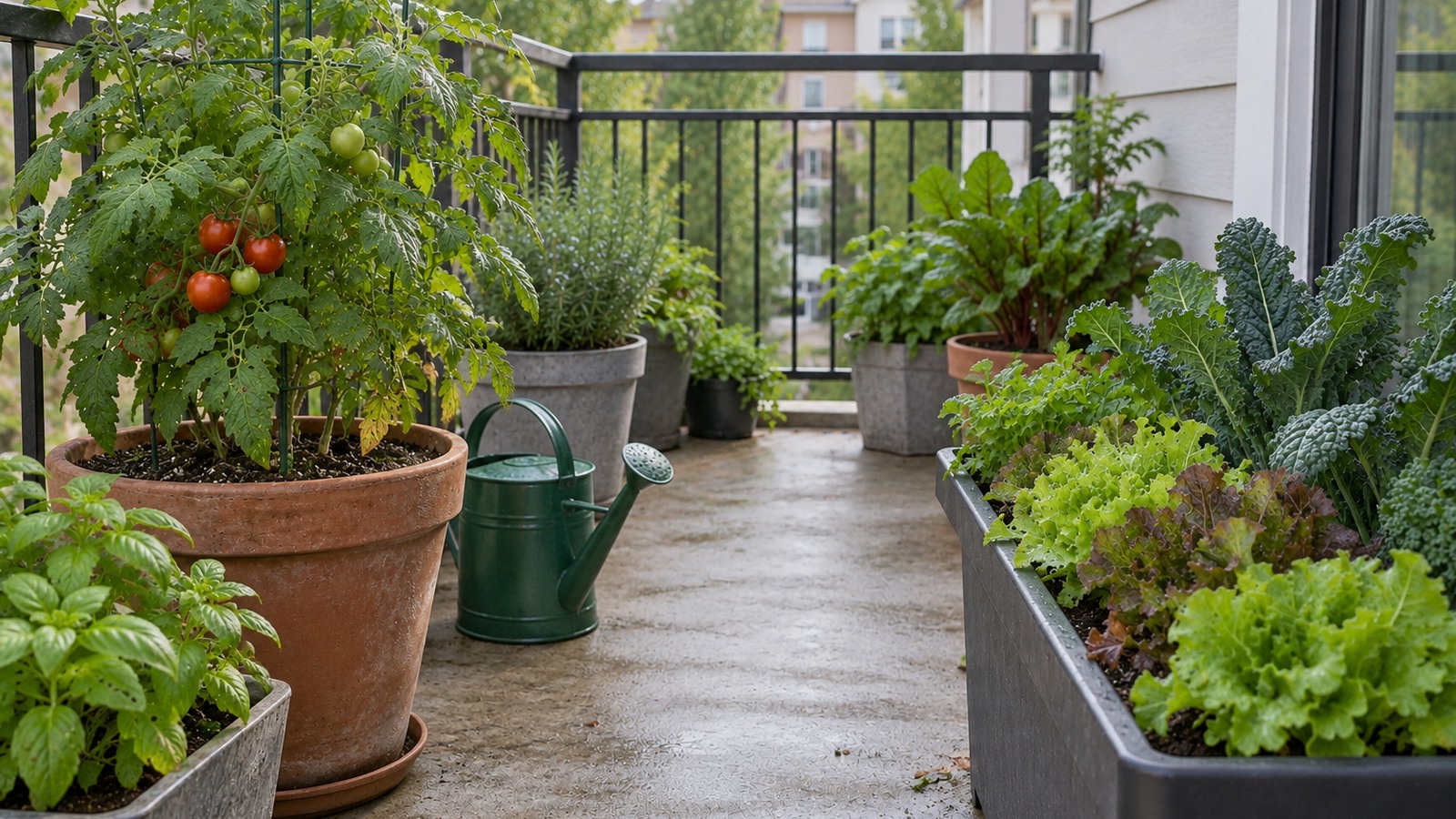

Planning your first container vegetable garden often starts with a few crops you would like to grow and a spot where their pots might fit. Before buying anything, it helps to connect those ideas with the space and care you can offer.
Work through sunlight, water access, drainage, permissions, and the crops’ needs, then choose a manageable number of containers. The planning table brings those decisions together so you can see what is ready and what still needs checking.
Record What Your Growing Space Can Support
Make one row for each possible growing position. Write down what you know, what it means for your plan, what still needs an answer, and the next step. Leave an item open when you do not know; guessing can turn a simple plan into an unsuitable purchase.
| Observation | What it means for the plan | Question to check | Next action |
|---|---|---|---|
| Usable floor area, doors, furniture, and walking route | The space left for containers and access | Will containers or supports block a door or shared path? | Measure the clear area and sketch the route before choosing a layout. |
| Direct sunlight at candidate positions | Which crop groups might fit | Is the observation representative of the season you plan to grow? | Compare the light at each spot with the crops you want to grow. |
| Water source and distance | Whether each position is convenient to water | Can you reach every planned container with a hose or watering can? | Move the proposed position or include a practical way to carry water. |
| Wind exposure and recurring reflected heat | Whether a position may need another site check | Does the location have regular exposure or heat from nearby walls and paving? | Mark exposed and sheltered spots; investigate before choosing supports or protection. |
| Permission, stability, surface, and runoff | Where containers may go and where drained water can travel | Are there building rules, load limits, attachment rules, or surface-care instructions? | Check building rules, weight limits, and surface instructions before placing containers. |
Sun and heat can vary across a small patio. Nearby walls and paving may make a spot warmer, so observe each potential container location before choosing crops.
Choose A First Garden You Can Care For
Start with a few vegetables you like and can care for. Make sure you can reach, inspect, and water each container. There’s no right number of pots; let your space, budget, and routine set the limit.
Use this checklist before settling on the number of crops:
- Can I reach each container without moving other items?
- Can I see the plants and reach them with water?
- Is there a plan for care when I am away?
- Does the setup fit my budget after I account for the container, growing medium, and any crop-specific support?
- Am I comfortable learning the needs of each crop on the list?
Then choose one of three actions:
- Reduce the plan if any container is hard to reach, a key site question remains open, or the supply total is too high.
- Keep the plan if each crop has a suitable place and the setup fits your routine.
- Expand only after you have observed how the current plan fits your time and space. Do not use a promised harvest as the test.
Shortlist Crops That Fit Your Site And Meals
Begin with food you already cook or eat. Then compare your list with the sunlight at each spot, local planting dates, the plant’s mature size, and the care it needs. For a rough guide, aim for 6–8 hours of direct sun for tomatoes and peppers, and 3–5 hours for lettuce and spinach. Local planting dates and variety instructions still matter.
| Crop | Cultivar habit to check | Local planting window | Light requirement | Proposed container to verify |
|---|---|---|---|---|
| Tomato | A compact or dwarf habit may suit a small site; check the specific variety | Local warm-season window; check local planting dates and the plant label | 6–8 hours of direct sun for this warm-season crop group | Match the container and support to the chosen variety’s mature size |
| Leaf lettuce | Check the packet for the selected type and spacing | Locally suitable cool-season window | 3–5 hours of direct sun for this cool-season crop group | Verify space for the selected planting style |
| Spinach | Check the packet for the selected variety | Locally suitable cool-season window | 3–5 hours of direct sun for this cool-season crop group | Verify the container against the selected variety and planting instructions |
Use the table as a shortlist, not a planting calendar or a promise that every crop will thrive in every spot. Check local planting dates and follow the seed packet or plant label for your variety. Container needs vary by crop and root depth, so choose the pot after you settle on what to grow.
Build A Supply List Around Decisions Already Made
List what each choice requires, then add a budget column using prices available to you. This keeps the list tied to the garden you actually plan to grow rather than a generic shopping haul.
| Supply | What to check | Budget |
|---|---|---|
| Container | Size and shape match the crop; the drainage design and placement work for the site | $_____ |
| Growing medium | Intended for container growing; compare the bag’s use and instructions | $_____ |
| Water access | A hose or watering can can reach the final positions | $_____ |
| Seed or transplant | The choice fits the local planting window and variety you selected | $_____ |
| Support | Add one only if the crop needs it; confirm where it can stand or attach | $_____ |
| Optional convenience | Include only if it solves a specific access, storage, or care problem | $_____ |
Mark what you already own and separate necessary items from conveniences. If the total is over budget, reduce the crop list or postpone an optional item. Do not buy a container that fails the crop’s requirements just because it costs less. For the specific mix and drainage decisions, use a container setup guide rather than adding amendments by guesswork.
Turn The Plan Into A First Season Checklist
Keep the finished plan on one page: your site notes, crop shortlist, supplies, questions to check, and next steps. Work through it in this order:
- Check building and surface rules, then plan where runoff will drain.
- Record sunlight at candidate positions and choose crops that fit the observed exposure.
- Check each crop’s local planting window, variety habit, container needs, and support.
- Sketch a layout that leaves room for access and mature growth.
- Price the supplies, then buy only what the plan calls for.
- Follow the crop and container instructions when you set up and plant.
- Note what you planted and where, changes in weather or site conditions, and whether the garden felt manageable.
- After the growing period, decide whether to reduce, keep, or expand based on what you observed.
For example, a small patio might have one sunny spot for a warm-season crop, another with less sun for cool-season greens, and water close by. A hypothetical three-pot plan could include a compact tomato, lettuce, and spinach, with the leafy crops planted in a different season. Check local planting dates and plant labels before buying. If three pots are too much to manage or too expensive, start with one or two.