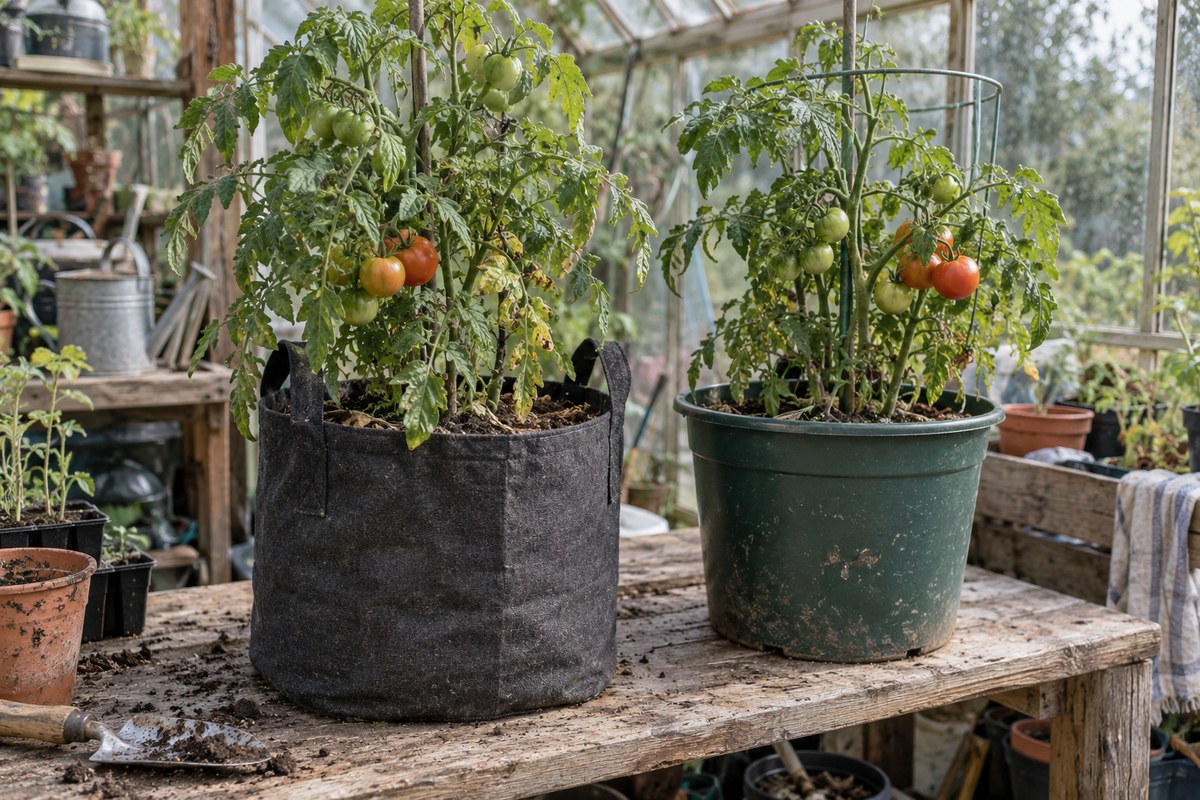

A stack of fabric grow bags and a row of plastic pots offer different ways to set up a container garden. Deciding between them is easier when you picture where the plants will grow, how you will water them, and where the empty containers will go afterward.
Here, “grow bag” means a porous fabric bag. Compare its flexible walls and storage needs with a rigid plastic pot’s shape and construction. Neither design guarantees a larger harvest; crop fit and the complete setup still matter.
Compare Grow Bags And Plastic Pots
This table compares general design features, not measured performance scores. Handles, drainage, reinforcements, and dimensions vary by product.
| Comparison Point | Fabric Grow Bag | Rigid Plastic Pot |
|---|---|---|
| Wall And Moisture Movement — Design Feature | Air and moisture can pass through the fabric. This can affect dry-down, but the wall alone does not set a watering interval. | Solid sides restrict movement through the wall. Mix, weather, plant size, and container volume still affect dry-down. |
| Drainage — Check The Design | Permeable fabric does not replace a base that can drain freely. | Check that drainage holes are present and can stay clear. |
| Shape And Support — Model-Specific | Flexible sides may change shape under the mix. Check that the base and supports fit the site. | Rigid sides hold their shape, but container size, base, and support placement affect stability. |
| Handling When Full — Check Product Instructions | Handle placement and stitching vary. Follow the maker’s directions before moving a filled bag. | Rims and grips vary. Do not assume the rim is a lifting point. |
| Empty Storage — Design Varies | Some bags fold or collapse; check the actual construction. | Rigid pots keep their shape; nesting depends on the design. |
Choose For Your Site And Watering Access
Where the container sits and how easily you can reach it will shape the choice.
- Hot, exposed patio: Sun and wind can dry tomato containers quickly, especially as plants grow. Place either container where you can inspect the mix and reach water easily.
- Sheltered, rainy spot: A roof or overhang may keep rain from reaching the mix. Check the mix after rain before watering instead of assuming it has reached the roots.
- Seasonal growing with limited storage: Think through how you will empty and store the container after harvest. Some bags fold and some pots nest, but the exact shape depends on the model.
Match Root Space And Support To The Crop
Compare usable volume and depth, not just the gallon label. Treat these published minimums as starting points, not universal targets.
| Crop Example | Published Minimum And Depth |
|---|---|
| Leaf lettuce, spinach, peas, radishes, cilantro, or green onions | 2 gallons and 4–6 inches deep for the smaller-vegetable group. |
| Tomatoes, peppers, broccoli, eggplant, squash, cucumber, or bush beans | 5 gallons and 12–18 inches deep for the larger-vegetable group. |
| Cherry tomatoes | 2 gallons, about 10 inches in diameter, as a tomato-specific minimum. |
| Standard tomatoes | 4 gallons, about 12–14 inches in diameter, as a tomato-specific minimum. |
The tomato figures come from different recommendations: one groups tomatoes with larger vegetables, while the other gives separate minimums for cherry and standard types. Keep those contexts attached to the numbers. Determinate and dwarf tomato varieties are easier to manage in containers than large indeterminate vines. Plan for a cage or stake before filling the pot, check that the support and container sit securely together, and set the container in place before adding wet mix.
What Air Pruning Means For Roots
When a root tip reaches air at the porous wall of a fabric bag, it can dry and stop extending; the plant may branch behind it. This is called air pruning. It changes how roots develop near the wall, but does not establish a yield or water-use advantage. Fabric bags still need enough root space and suitable care.
Check Construction Handling And Storage Before Buying
Compare two containers with similar usable capacity, then check the details of each model:
- Confirm dimensions and capacity. Check the inside depth and width along with the listed volume; a gallon label does not show the container’s shape.
- Inspect the walls and seams. Look for sturdy stitching and handles on a bag, or weak spots and a sound rim on a plastic pot.
- Check drainage openings. Make sure they are present and will remain clear where the container will sit.
- Read material and use information. Check the maker’s instructions for outdoor use, growing edible plants, cleaning, and moving a filled container. A generic material name does not establish a product’s suitability or lifting capacity.
- Measure empty storage space. Compare actual folded or nested dimensions with the space you have.
- Check durability claims against the exact product. Statements about UV resistance, load limits, or years of service need product-specific documentation.
Inspect Containers Before Reusing Them
Before reusing a container, check its past use, condition, and drainage:
- Review what it held. Do not reuse a vessel that held paint, pesticides, fuel, detergents, or other chemicals for edible crops. Appearance alone does not reveal past contents.
- Consider disease history. When a previous plant had a serious soil-borne disease, do not move its old mix into a new crop. Cleaning methods depend on the plant problem and container material.
- Inspect the whole container. Look for torn seams, loose handles, cracked or brittle plastic, sharp edges, and blocked drainage. Replace containers that cannot hold the mix securely or drain properly.
- Clean before refilling. Remove old roots and mix, then follow the maker’s cleaning instructions and a method suited to the plant disease and container material. One sanitation recipe does not fit every case.
What Research Can Tell Us About Container Materials
- A 2024 tomato-container study compared nine container treatments for one tomato variety, Kashi Aman, in India. It used 18-by-18-inch containers, three replications per treatment, and a soil, farmyard-manure, and sand mix. The reported yields were 2.27 kilograms per plant in a green grow bag and 2.08 kilograms in a plastic pot. The paper’s critical difference was 1.48 kilograms, much larger than the 0.19-kilogram gap, so the trial did not establish a yield difference between those treatments. It does not settle results for other crops, climates, mixes, or products.
- A 2014 ASHS conference abstract examined quart-size nursery containers made from alternative materials alongside plastic controls. It measured water loss through the container walls and the temperature of the growing mix, not vegetable yields in retail fabric bags. It helps explain possible wall effects but cannot rank consumer grow bags and pots.