
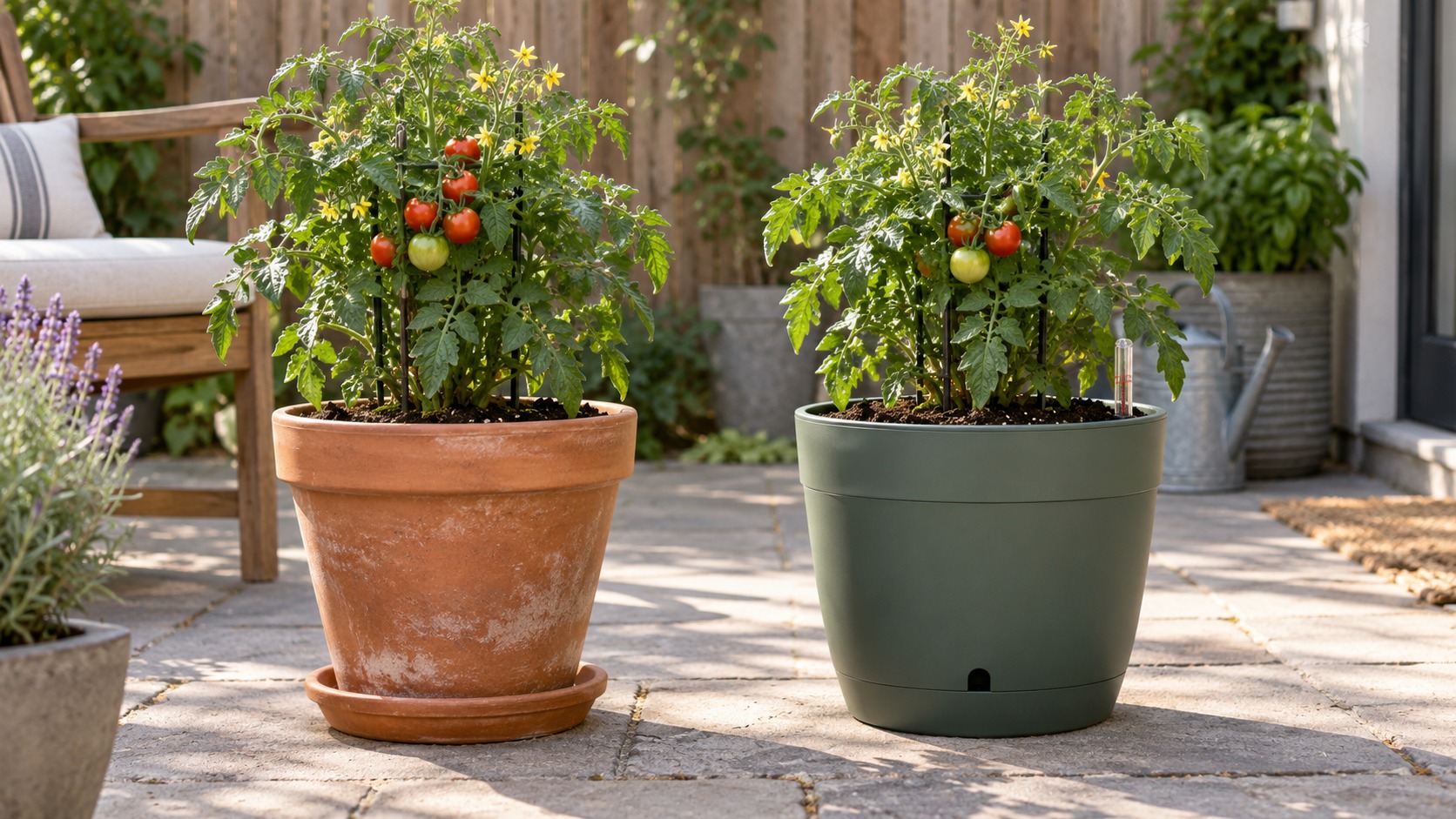

When you are choosing a vegetable container, a reservoir planter can raise a practical question: how different will watering actually be? The answer starts with how water reaches the growing mix and what you will need to check.
A standard pot takes water from above and drains below; a self-watering planter stores water in a reservoir. Compare setup, refill access, runoff, and routine care alongside your crop and growing space. Both designs still need attention as conditions change.
Compare The Two Designs At A Glance
| What To Compare | Reservoir Planter | Standard Pot |
|---|---|---|
| Water delivery | Add water through a fill opening; a wick or contact area moves it into the mix. | Water the mix from above; excess exits through bottom holes. |
| Routine | Check the mix, reservoir level, and overflow; refill as the plant and weather require. | Check moisture below the surface and water when the mix needs it. |
| Runoff | Outdoor models need a clear overflow route for rain and excess water. | Keep drainage holes clear and empty standing water from the saucer. |
| Setup | Follow the planter’s instructions for its platform, wick, and growing mix. | Use a container suited to the crop, with open drainage and room for runoff. |
| Main trade-off | Refilling can be simpler when the fill point is easy to reach, but there are more parts to check. | Setup is straightforward, but watering may need more frequent attention in hot or windy spots. |
Neither design is a universal winner. The better fit depends on the crop, the location, and how you prefer to water.
How Drainage And Reservoir Watering Work
A standard pot receives water from above. The mix holds some moisture, and surplus water drains through holes in the bottom. A saucer catches runoff; it is not a reservoir, so empty it rather than leaving the pot in standing water. A standard pot has no separate water store, which makes the growing mix and its exposure central to how often it needs checking. Keep the pot’s drainage holes and runoff route clear.
A reservoir planter stores water below or beside the growing area. A wick, perforated platform, or other contact area moves moisture up into the mix. Some designs also let roots grow through the platform toward the stored water. The reservoir sits outside the main growing area, so the planter’s total height or capacity does not tell you how much room the roots have. Outdoor models need a route for rain and excess water to escape. Find the overflow before choosing a spot, especially where runoff could collect on a balcony or patio. A self-watering container separates the planting area, water chamber, and overflow, though the exact layout varies by planter.
Growing media and assembly directions are system-specific. The EarthBox instructions, for example, call for a peat-based medium and tightly packed wicking corners for that planter. Those details do not automatically apply to other models. A mix that works in an ordinary pot may not wick correctly in a particular reservoir design, so check the model’s directions before filling it. For either style, choose a suitable container mix and follow its fertilizer directions; see potting mix and drainage basics for more on the standard-pot setup.
Choose The Design That Fits Your Routine
Start with the spot where the container will sit and how you want to water it.
A Reservoir Fits When Refilling Is Easy
A reservoir planter suits a location where its fill opening will remain reachable after the plant and its support grow. For example, a planter beside a frequently used patio door may be easier to refill through a tube than to water over the foliage each time. Consider the full-grown plant when checking the reach: leaves, ties, and a cage can make a fill point that seemed convenient at planting time hard to use later. The convenience disappears if a tall cage or crowded railing blocks the opening or overflow.
The reservoir level and the mix answer different questions: a gauge shows stored water, while a check in the mix shows whether moisture is reaching the root area.
A Standard Pot Fits When Direct Watering Suits You
A standard pot works well when you prefer a simple setup and can water near the container. A pot beside an outdoor faucet is easy to inspect and water directly, with no separate chamber or wick to assemble. This can be a good fit when you already pass the container during a daily routine and want to see the pot’s condition as you water it.
The trade-off is that sun and wind can dry container mix quickly, especially in small pots or as plants mature. Keep moisture more consistent for tomatoes because swings can contribute to cracking and blossom-end rot.
Exposed Sites Need Attention Either Way
Hot, sunny, or wind-exposed sites increase the need to check either design. Small containers dry sooner than larger ones, and mature plants use more water than young plants. Even two pots on the same balcony can dry at different rates if one sits in stronger sun or wind. A reservoir may lengthen the time between refills when its capacity meets the plant’s demand, but it cannot guarantee the same interval in every location.
Check These Details Before Buying And Setting Up
- Root space: Compare usable growing-mix depth and volume with the mature crop’s needs. Reservoir capacity is separate from root space. For tomatoes, variety matters too: cherry and standard types have different container needs, and a tall plant may also need room for a cage or trellis.
- Access and water escape: Stand in the container’s intended spot and check that the fill opening and overflow will remain reachable. For a standard pot, check that the holes are open and runoff has a safe place to go, including after rain.
- Mix and assembly: Read the exact model’s manual before choosing media or assembling a wick or platform. Check fertilizer directions as well, since one system’s mix may not suit another. Keep any supplied parts or fill instructions with the planter for setup.
- Stability and filled weight: Include the container, wet mix, mature plant, support, and stored reservoir water. Choose a level, sturdy location before filling; moving a planted container later can be difficult.
- Full setup cost: Compare the whole arrangement: compatible mix and required parts for a reservoir planter, or a suitable pot, runoff tray, and plant support for a standard pot. Check whether the planter needs components sold separately before comparing it with a basic pot.
Plan For Time Away From The Garden
A self-watering container can reduce how often you refill, but it does not guarantee a set number of days away. Set it up according to its instructions, then track how quickly the water level falls as the plant matures. Note how much water you add at each refill, the time between refills, sun, wind, temperature, and recent rain. Repeat the observation after the plant grows or the weather changes; a short check on a small plant will not predict demand later in the season.
For a standard pot, track how quickly the mix dries enough to need water and how much water reaches the roots. The moisture checks in our container-watering guide can help you observe that routine without relying on a fixed schedule.
Before leaving, compare your observations with the available water and expected weather. Arrange a garden check or a tested watering setup when the supply may run short, and keep the planter’s drainage or overflow route clear.
What Research Says About Water Use And Yield
A 2020 greenhouse tomato experiment compared pumped, recirculating subirrigation with drip irrigation. It used one tomato cultivar in 13-liter containers; the drip treatment used a 30 percent leaching fraction. The subirrigation treatment used 22 liters of nutrient solution per kilogram of fresh tomatoes, compared with 41 liters under drip, while fresh-fruit yield was 9.5 percent lower. This was a managed setup with pumped recirculation, not a passive consumer planter.
The study is useful for showing that irrigation method can affect both water use and harvest, but its measurements are not a buying score for home planters. A lower water figure may come with a yield difference, and it does not measure everyday tasks such as refilling, carrying a heavy pot, or clearing runoff. For a home setup, compare the container’s routine and the crop’s performance in your own space.