
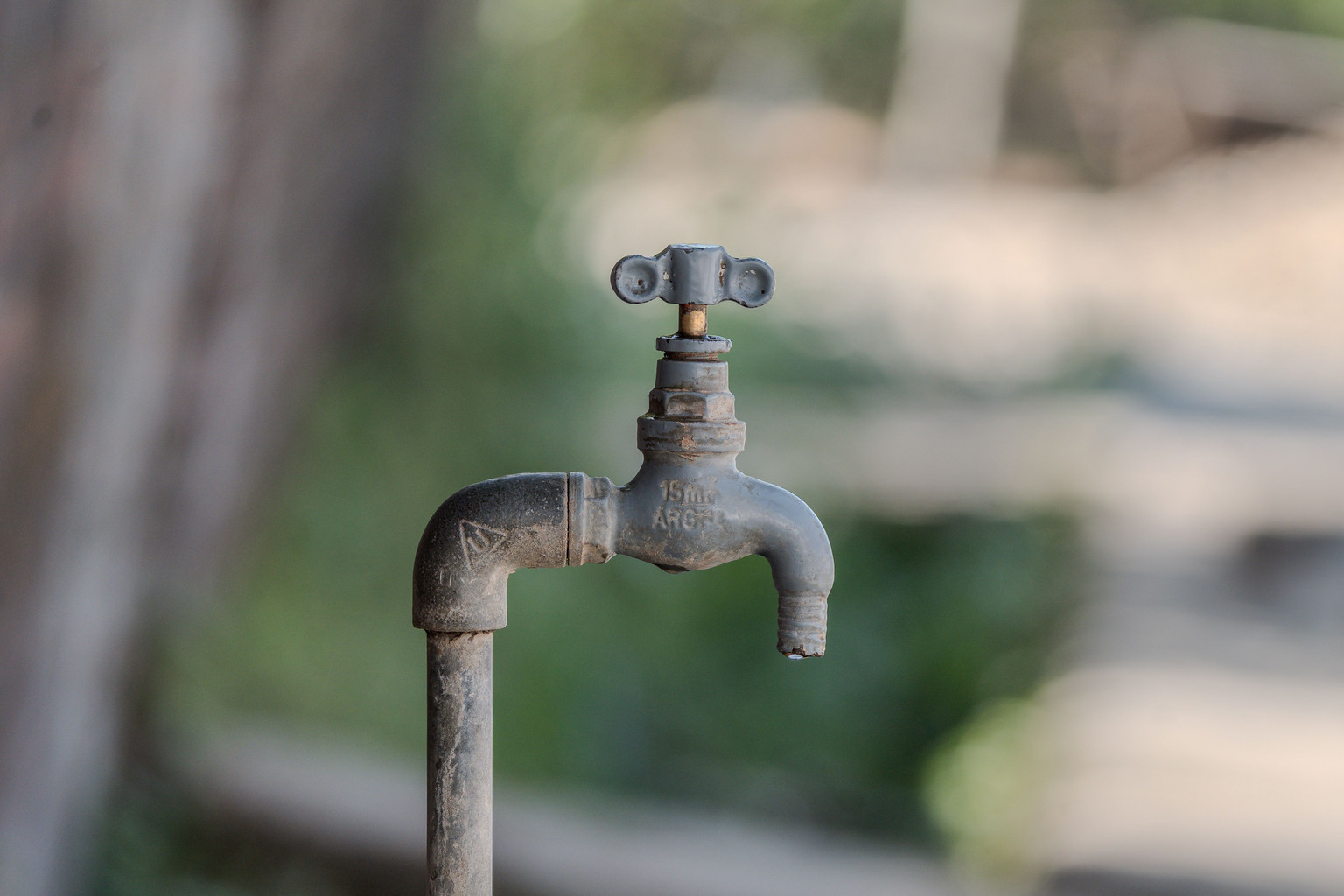

Turning on the garden tap is familiar; interpreting the water supplier’s report may be less so. If your water comes from a public supplier, its report can help you investigate what reaches your vegetable pots.
Find the report for your service area, then check whether household treatment changes the water at the faucet you use. The guide below separates the measurements and their limits. A public drinking-water report does not certify suitability for every crop or growing mix.
Find The Report For Your Watering Tap
Find the supplier name on your water bill. For a community water system, get its latest annual report from the supplier or use the EPA tool to find your annual water-quality report. Check that the report year and service area match your address.
For a private well or other noncommunity source, use records or testing guidance for that supply through its operator or an appropriate local agency; a nearby city’s report will not describe it. Keep the report date, source, service area, units, and any household treatment with your notes.
A community report covers public drinking-water information. It may not describe water after a household treatment system, and it does not certify that the water suits every crop or potting mix. It may also leave out gardening fields such as total alkalinity or electrical conductivity.
Understand The Numbers Separately
The measurements answer different questions:
- Water pH describes how acidic or basic the water is at the time of measurement. It does not measure alkalinity.
- Total alkalinity measures the water’s ability to neutralize acidity. Repeated use of water with high alkalinity can shift a growing medium’s pH. The effect depends on the crop, mix, fertilizer, and container; high water pH alone does not show that alkalinity is high.
- Hardness mainly reflects calcium and magnesium. It is separate from alkalinity, even when both results use a calcium carbonate basis.
- Electrical conductivity (EC) indicates the combined conductivity of dissolved ions. It does not identify which ions are present. Keep the units and temperature or reference conditions with the result.
- Total dissolved solids (TDS), sodium, and chloride are separate fields. TDS may be measured or estimated, depending on the method. Sodium and chloride are specific ions; do not infer them from EC or convert EC to TDS with one universal factor.
Water and fertilizer both add dissolved salts to a container. As water leaves, salts can become more concentrated. A surface crust or damaged leaf edge can be a reason to check the water, fertilizer, and growing conditions, but a symptom alone cannot identify the cause.
Water pH and potting-mix pH are different measurements. To check the mix itself, test the pH of your potting mix.
Check Disinfectants And Household Treatment
For community water, the supplier can tell you whether it uses chlorine or chloramine as a disinfectant. Chloride is a dissolved ion reported separately in some water analyses; it is not another name for the disinfectant.
EPA’s 2009 monochloramine FAQ says leaving water at room temperature or boiling it does not remove monochloramine. This is a removal statement, not a plant-injury threshold; the disinfectant’s presence alone does not show crop injury.
Check whether a household softener serves the faucet you use. Many residential sodium ion-exchange softeners replace calcium and magnesium with sodium. Naturally soft water is different from water treated this way, and an outdoor faucet does not automatically bypass the softener.
Choose treatment only for a specific target. Particle filters, systems that reduce dissolved salts, and treatments intended to reduce a disinfectant do different jobs. Check the exact model’s current performance claim or certification, its operating conditions, and maintenance needs; a generic product label is not enough.
Read A Report With One Missing Field
The values below are invented for illustration. They are not from a utility report, water test, or plant trial.
| Field | Hypothetical result |
|---|---|
| Water pH | 7.8 |
| EC | 600 µS/cm; temperature and reference conditions not stated |
| Total alkalinity | Not reported |
| Disinfectant | Chloramine |
| Softener routing to the watering tap | Unknown |
| Hardness | A separate result, if reported |
Leave alkalinity marked “not reported.” A pH of 7.8 or a hardness result cannot fill it in. For this example, confirm that the report matches the property and identify any treatment between the supply and watering tap. Request total alkalinity, its units and basis, and expected variation from the supplier. If the information is unavailable or treatment changes the water, use an irrigation-water analysis of a sample from that tap and follow the lab’s sampling directions.
The EC can be restated for comparison: 600 µS/cm ÷ 1,000 = 0.60 mS/cm, which is also 0.60 dS/m.
Suppose a later analysis hypothetically reports total alkalinity of 100 ppm as CaCO₃. Using 50 ppm as CaCO₃ per meq/L, 100 ÷ 50 = 2.0 meq/L. In dilute water, 100 ppm is approximately 100 mg/L as CaCO₃. This is a unit conversion, not a crop threshold, treatment dose, or verdict that the water is suitable.
Choose A Next Step From The Data
- If the source and faucet are known, plants are growing well, and there is no specific water or treatment concern, do not choose a filter or pH adjustment from the report’s pH alone.
- For another missing field, request it from the supplier or use an irrigation-water lab that reports it with units and basis. Do not substitute a different measurement.
- If the tap’s softener routing is unknown, confirm it. If it receives sodium ion-exchange softened water, identify an unsoftened supply if available or obtain water analysis and advice appropriate to the crop and potting mix.
- For help interpreting actual results, provide the report or analysis along with the crop, potting mix, container, fertilizer, and drainage details to a local horticultural professional.
Choose an irrigation-water laboratory that measures the required fields and explains their units and basis. For a source-water analysis, sample the actual watering tap before adding fertilizer or other additives, following that lab’s own collection instructions.
A pH pen measures pH; it does not measure alkalinity or identify individual ions. An EC meter measures conductivity, not every part of the water analysis. Match any meter to the field you need, and follow its directions for calibration and interpretation.