
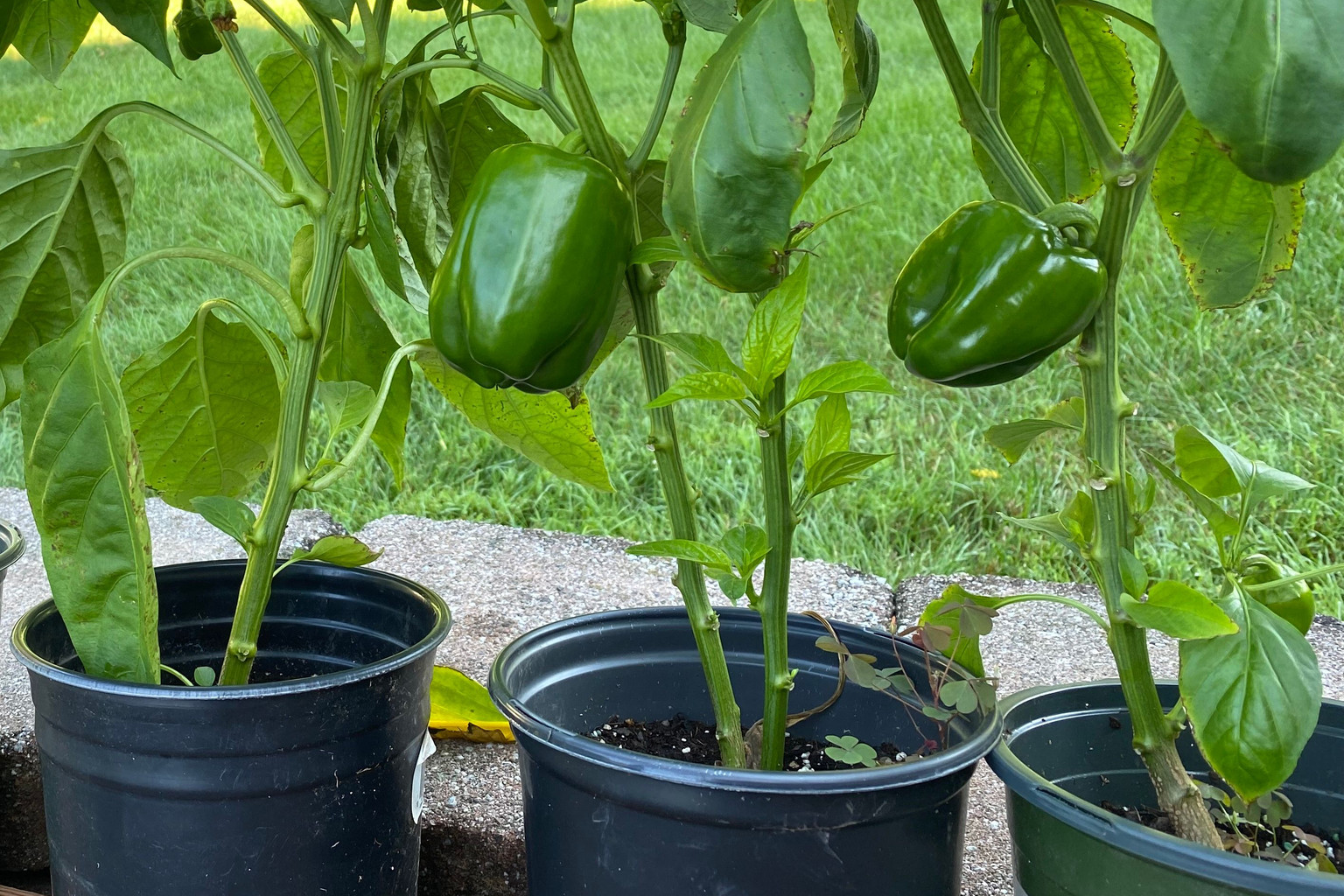

Thinking about growing peppers on your patio or balcony? You may already have a variety in mind, or you may still be wondering where its pot would fit. A good starting point is choosing a pepper that suits your space and finding a sunny spot for it.
From there, this guide walks you through choosing a container, planting your nursery start, and caring for it through harvest.
Choose A Pepper For The Space And Harvest
Decide whether you want sweet or hot peppers and how you plan to use them. Check the cultivar’s mature size, growth habit, and estimated time to maturity on its label or nursery description. A small fruit does not mean a small plant; use the maturity estimate with your local growing season, not as a fixed harvest date. Choose a known culinary variety rather than assuming an ornamental pepper is edible or mild.
Maryland Extension recommends at least 6 hours of direct sun daily, with 8–10 hours preferred. Count direct sun where the pot will sit; bright reflected light does not count the same way. The sunlight-check method can help you track it. Check for seasonal shade, heat, and wind, and make sure you can reach the plant to water and pick it.
Set Up The Container Before Planting
For one pepper in an ordinary outdoor pot, Maryland Extension recommends at least 5 gallons. Treat this as a planning starting point, not a universal minimum for every cultivar. Check the pot’s depth, usable capacity, mature plant size, and support fit.
Use potting mix made for containers rather than heavy garden soil. Check whether the mix already contains fertilizer, and keep the container’s drainage holes open. A gravel layer will not fix a blocked hole. Place the pot where it will stay, dampen dry mix before filling, and leave space at the rim for watering.
Choose a stake, cage, or short trellis suited to the plant’s mature height and fruit-bearing branches. Set it in place while planting, before roots spread through the pot. Leave room to water and harvest, and position the pot on a stable surface.
Plant The Start At Its Original Soil Line
Check The Plant And Local Weather
If the nursery plant has not adjusted to outdoor light and conditions, increase its exposure gradually before leaving it outside full time. Follow the hardening-off steps. Use local Extension planting guidance to judge seasonal frost risk, then check current forecasts and temperatures. Plant when frost risk has passed, conditions are warm enough for peppers to grow, and the start is acclimated to the site.
Keep The Root Ball At Its Original Level
Water a dry root ball before handling. Support the root ball and ease the nursery pot away instead of pulling on the stem. Keep the root ball intact and align its mix surface with the finished mix, as described in Minnesota Extension’s pepper transplanting guidance. Do not bury the stem as you might with a tomato.
Fill around the root ball gently, then water slowly at the base and let excess drain. If only the surrounding mix settles, top it up to the root ball’s original surface without covering the stem. If the root ball itself sinks, support and reseat it intact, adding mix beneath as needed; do not pull the stem upward. The nursery-start transplanting steps cover the handling method.
Water And Feed From What The Pot Needs
Check Moisture Around The Roots
Check the mix below the surface near the roots and original root ball. Pot size, mix, wind, rain, heat, and plant growth affect how quickly it dries, so water when the root area needs it instead of following a fixed daily schedule. Water slowly until the root area is moist, then let excess drain. If water runs straight through, apply it in several passes to give dry mix time to absorb it. Empty an ordinary saucer after drainage. Reservoir planters have their own setup and watering instructions. See the root-area watering method for more detail.
Follow The Fertilizer Label
First account for fertilizer already in the mix and anything applied since planting. Then follow the selected product’s directions for peppers in containers and the plant’s growth stage. Use the stated amount, measuring method, and application directions, and record the product and date. Repeat only as directed. If label directions or prior feedings are unknown, confirm them before adding more. The numbers on a fertilizer bag show nutrient proportions, not how much to apply. A generic weekly schedule can also conflict with what is already in the pot. The container fertilizing plan explains how to use the label.
Support Growth And Keep Useful Leaves
Pepper stems can become brittle as the plant grows and carries fruit. Check the stake or cage, use loose ties that do not constrict stems, and keep access open for watering and picking.
Leave healthy leaves and shoots in place as a general container-care approach. Pepper leaves shade developing fruit from intense sun. Topping or removing suckers is not a routine requirement, and tomato pruning advice does not automatically apply to peppers.
Check Problems Before Treating
Wilting can come from dry mix, wet roots, heat, or another stress. Check the root area and drainage before changing watering or feeding. Peppers are largely self-fertile, though hot or dry conditions can interfere with flowers and pod production; a second plant, daily flower tapping, or extra fertilizer is not an automatic fix.
Pale, spotted, or chewed leaves and damaged fruit can have several causes. Inspect both sides of the leaves and note recent weather, watering, and feeding. Poor moisture conditions can contribute to fruit-end damage, but that symptom alone does not prove a calcium shortage. Use a local Extension diagnostic service for symptoms that persist, spread, or remain unclear before choosing a treatment.
Harvest For Variety And Use
Check the cultivar’s mature size and color. Many culinary peppers can be picked green or left on the plant to reach mature color, depending on variety and intended use. A green jalapeño is one familiar example, but picking stage and color vary by cultivar.
Support the branch and clip the fruit stem with clean, sharp shears instead of tugging. Wear gloves when picking hot peppers, wash your hands afterward, and keep them away from your eyes and face.
Check the local frost forecast and harvest developed fruit before frost can injure the plant. Very immature green peppers may not finish ripening indoors.