
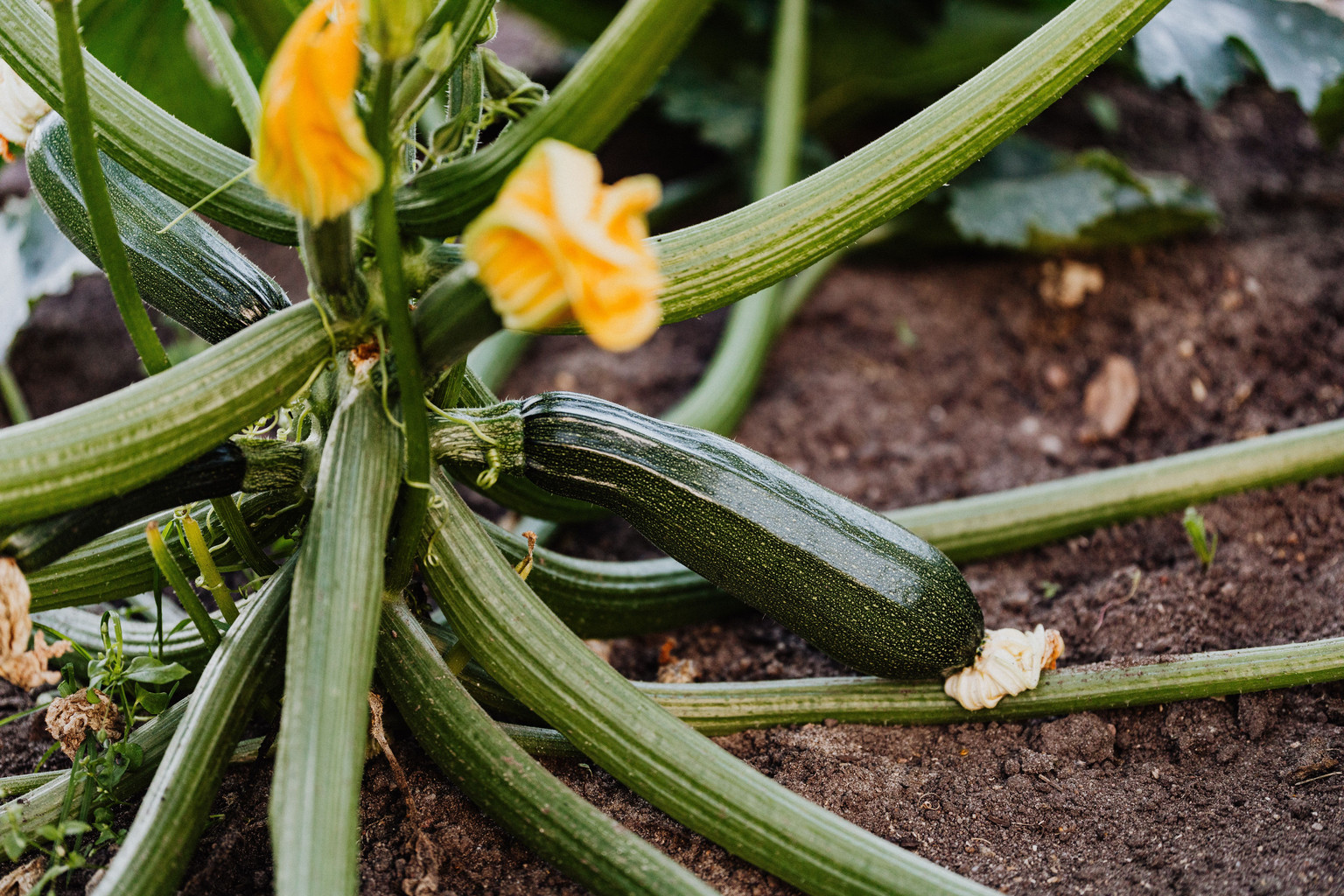

Making room for zucchini in a patio garden means planning for the leaves as well as the pot. You may be choosing a compact outdoor variety or working out where a young plant you already have will go.
This guide helps you match that choice with a suitable container and growing spot, then takes you through sowing or transplanting, everyday care, pollination, and tender-fruit harvest. Begin with the variety’s mature habit and the space you can give it.
Choose A Variety And Growing Spot
Look for an edible zucchini variety suited to outdoor growing. The seed packet or nursery label should describe its mature habit, fruit shape and color, and intended use. Compact or bush types can be easier to fit into a small space, while some varieties trail. Even a compact plant needs room for roots and broad leaves.
The University of Maryland Extension’s summer-squash guide sets a useful sun target: at least six hours of direct sun a day, preferably eight to ten. Check the actual spot over the day, since a bright patio may be shaded for part of it. Use this sunlight-measuring method to check the hours, and consider local heat and wind.
Allow the mature leaves to spread without shading nearby plants beyond their light needs. Leave clear access to water each pot, reach the flowers, and pick fruit.
Choose A Pot And Prepare The Mix
The University of Maryland Extension’s general container chart lists 10 gallons as the minimum for summer squash, while noting that compact varieties can sometimes fit in smaller pots. The UK Royal Horticultural Society (RHS) recommends one compact or bush courgette (zucchini) in a pot at least 45 cm (18 in) wide. The first figure is volume; the RHS figure is width only. Check the pot’s usable depth and capacity against the chosen variety before planting.
For your first container, grow one plant in a pot suited to its mature habit. Plan additional plants only where the cultivar and container directions allow room.
Use potting mix made for containers. Dampen dry mix before filling, keep it loose, and leave room below the rim for watering. Keep ordinary drainage holes open. For the shared mix and drainage steps, see Potting Mix And Drainage For Container Vegetables. Self-watering containers have their own wick and reservoir setup, so follow the planter’s directions for mix and filling.
If the variety trails or needs guidance, choose and install its support before planting. Support depends on the cultivar and pot; compact bush plants do not all need a trellis.
Plant Seeds Or A Young Start
Zucchini is a frost-sensitive warm-season annual. Plant after frost danger has passed and the growing mix has warmed, using local conditions, the forecast, and the packet or nursery directions. It grows for one season rather than returning as a perennial, so plan a new plant for the next growing season.
Choose either direct sowing in the final container or a healthy young nursery plant. Prepare the pot first so new roots can settle without another move.
Sow Seeds In The Pot
Follow the packet for seed depth and spacing, then water gently and keep the germinating area moist. Once seedlings have established enough to choose what will remain, cut extras at the mix surface to keep this plan’s one plant. Cutting avoids pulling against the retained roots.
Plant A Young Nursery Start
If a protected-grown start has not already adjusted to the site, harden it off gradually before leaving it outdoors. This helps it adjust to outdoor conditions; it does not protect it from frost. Follow Hardening Off Vegetable Starts Before Container Planting when acclimation is needed.
Choose a young, healthy start. Water its root ball beforehand if the mix is dry, then support it as you ease away the nursery pot without pulling the stem. Keep the roots and mix together. For a grafted start, plantable pot, or damaged roots, follow the nursery’s crop and handling directions.
Keep the original nursery soil level, following the young-squash guidance in the University of Idaho Extension’s archival 2014 handbook. Adjust mix beneath the intact ball so its nursery surface meets the finished mix around it, settle gently, and water the planted root area. Transplanting Nursery Starts Into Vegetable Containers covers the handling steps.
Water And Feed According To Conditions
Check moisture below the surface near the roots instead of relying on a fixed schedule or treating wilt as a thirst signal. For a young transplant, check its original root ball as well as the surrounding mix. Weather, pot material, and mix affect how quickly the root area dries. When it needs water, apply it slowly at the base so the mix can absorb it and excess can drain from an ordinary pot. Empty standing water from the saucer. A daily check can help while learning how quickly the pot dries, but it does not mean watering every day. See How To Water Container Vegetables for the shared moisture-check method.
Before adding fertilizer, check the mix label, nursery feed, and any fertilizer or amendments you have applied since. If the feeding history or product directions are unclear, wait to add more feed until those details are known; otherwise suitable planting can proceed.
If feeding is appropriate, follow the actual product’s directions for the crop, container, and growth stage. Keep the rate and its measuring basis with the application method and repeat conditions, and record the product, amount, and date. Building A Fertilizing Plan For Container Vegetables explains how to read those directions.
Understand The Flowers And Fruit Set
Ordinary zucchini plants need pollen transfer between separate male and female flowers for fruit to develop. Male flowers grow on slender stems; female flowers have an ovary or small swelling below the bloom. That swelling is not proof of successful fruit set. Male flowers may appear first, and one plant can carry both types. Fruit set still depends on suitable flowering and pollen transfer.
Some summer-squash varieties are parthenocarpic, meaning their fruit can set without pollination. Flower sex and fruiting without pollination are separate traits, so confirm this ability on the variety information before relying on it. The summer-squash flower and pollination guidance explains flower roles and this cultivar-specific exception.
For a zucchini that needs pollination, leave pollen-producing flowers in place and allow pollinating insects to reach them. If a cover or netting keeps needed insects out, review the cultivar and cover directions to provide access while flowers are open. When female flowers do not set fruit, check whether both kinds of flowers are open, along with insect access, weather, and ordinary care. Hand pollination is one possible response when pollen transfer is inadequate, rather than a routine task or guaranteed fix.
Check Problems Before Treating
Wilting, yellowing, poor fruit set, or damaged fruit can have several causes. Check root moisture, drainage, weather, and the whole plant before adding water, fertilizer, or a spray. Pests can still reach container plants.
For damage that persists, take clear photos and note recent watering, weather, and products used. A local plant diagnostic service can help identify the problem before treatment.
Harvest While The Fruit Is Tender
Use the packet or nursery directions for the variety’s expected fruit size, shape, and color. Pick zucchini while it is tender, before it becomes oversized, hard-skinned, or seedy. Check the plant often once fruit begins to form. Some varieties are yellow, so color alone does not mean a fruit is overripe.
Support the fruit and cut its fruit stem with a clean knife or pruners. Leave the main stem intact and avoid tugging on the plant. Where practical, wait for dew or rain to dry before handling the foliage, to reduce disease spread.
Keep checking for fruit at the variety’s tender picking stage as the season progresses. If flowers fail to set or the plant’s growth changes, review moisture, needed pollinator access, and the whole plant before changing care.