
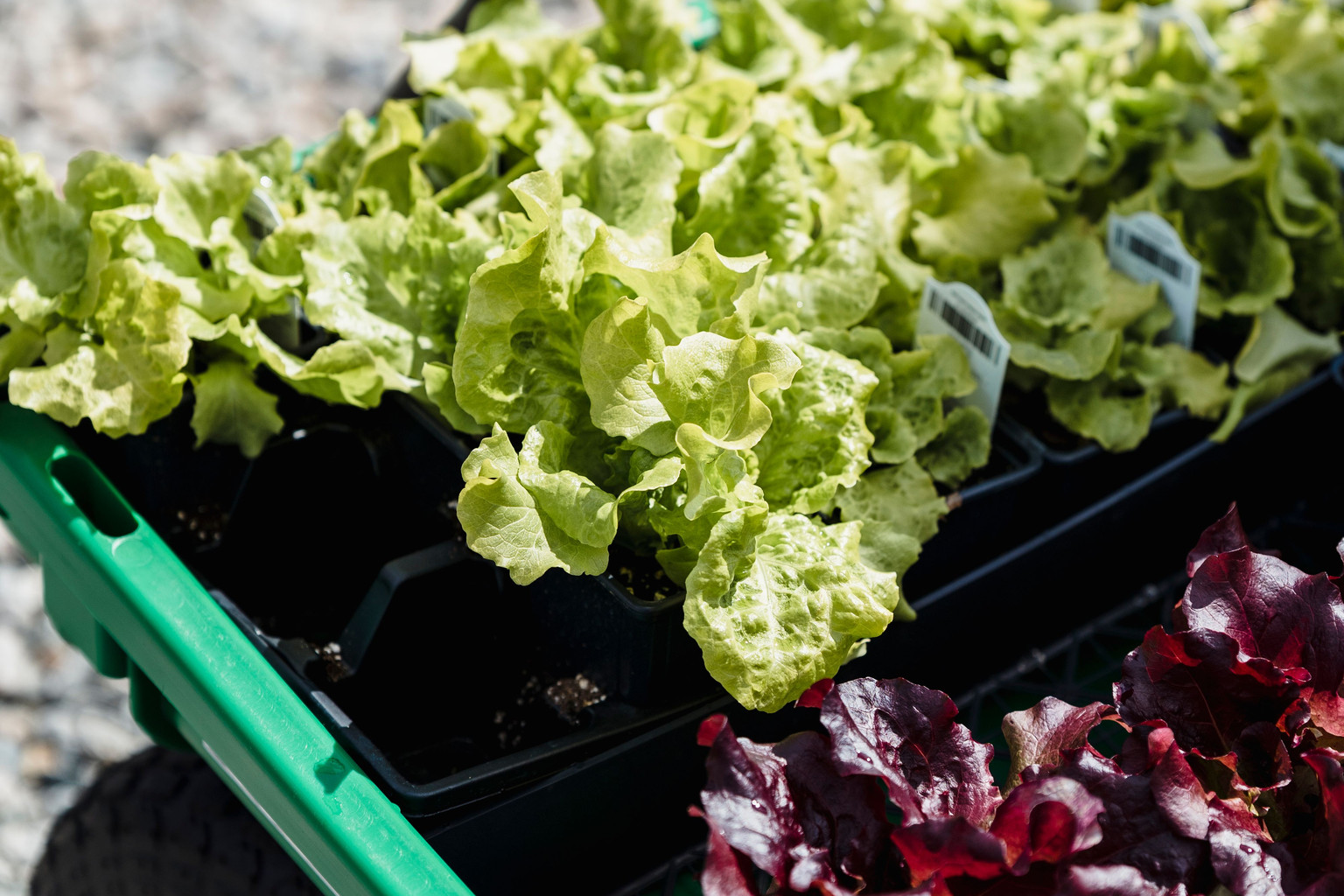

Fresh lettuce close to the kitchen does not need a garden bed. A pot of loose-leaf lettuce is a practical starting point if you want a few leaves at a time. You can plan for small pickings, a batch of young leaves, or a whole head, depending on the lettuce and space you choose.
This guide helps you match the plant, pot, and harvest method, then care for the crop. Repeated harvests depend on recovery and a suitable season; heat, age, and bolting eventually end a planting.
Choose Lettuce For The Harvest You Want
This guide covers edible lettuce (Lactuca sativa). Loose-leaf, butterhead, romaine, and crisphead types grow into different forms and reach harvest at different stages. Loose-leaf lettuce suits small pickings or a young-leaf crop. Hearting types need room to form heads. Read the packet for the cultivar's intended harvest, mature size, spacing, and season. A “slow-bolting” label does not mean a plant will never flower.
Salad seed mixes may include endive, arugula, mustard, or other greens alongside lettuce. Check the packet and follow lettuce-specific directions for lettuce; the other plants may have different spacing and harvest needs.
Decide whether you want to pick a few leaves, cut young leaves in a batch, or grow a mature head. These goals use different spacing and timing, so choose the seed or starts for the harvest you want.
Find A Cool-Season Window And A Suitable Spot
Lettuce generally grows best in cool conditions. Give the selected cultivar time to establish and produce before persistent heat arrives. Spring and fall windows vary by location, so use local planting guidance, the packet's maturity range, and the forecast together instead of relying on one national planting month.
Lettuce may tolerate a light frost, but a hard freeze can injure plants. Heat, longer days, and water stress can prompt bolting, when the plant sends up a flower stalk. Leaves may turn bitter or lose quality. Cutting leaves will not reset a bolting plant.
Choose light for the season and crop. Spring and fall lettuce often grows well in sun; light shade or protection from intense afternoon sun may help in hotter conditions. Check exposure where the leaves grow. The sunlight observation method for containers can help compare possible spots.
Choose A Container And Potting Mix
Container examples use different measurements. Keep each one with the setup it describes:
| Example | Stated Size | What It Covers |
|---|---|---|
| RHS lettuce sowing example | At least 1 foot wide | Width only; no depth is specified. |
| RHS lettuce transplant example | At least 1 foot (30 cm) wide and deep | A transplant setup, not a universal plant count. |
| RHS baby-salad container | More than 6 inches (15 cm) deep | A separate young-leaf setup, not a rule for full heads. |
| University of Maryland leaf-lettuce chart | At least one-half gallon | Volume only; it does not specify shape, depth, or plant count. |
A five-gallon label alone cannot tell you how many lettuce plants will fit. Use the container's inside dimensions, the cultivar's mature size, your harvest goal, and packet spacing. A close baby-leaf planting is different from a plan for full heads.
Use potting mix made for containers and keep the drain holes open. Dense garden soil may restrict air around roots and hold too much water in a pot. Leave out gravel or other fillers in the bottom; they take up root space, and gravel does not improve drainage. Moisten dry mix before filling, keep it loose, and leave room near the rim for watering. Check whether the mix already contains fertilizer.
For a planter with a separate water reservoir, follow that model's mix, setup, and refill directions.
Sow Or Transplant, Then Thin
You can start lettuce from seed or set out young plants. Sow seed lightly and evenly into fine, moist potting mix. Follow the packet for how much to cover it, then water gently so the seed stays in place. Keep the seed zone moist while seedlings emerge without leaving the pot saturated. Heat can hinder germination for some lettuce varieties.
Published depth examples differ. A University of Minnesota field example covers seed by one-quarter to one-half inch; the RHS lettuce page gives 1 cm (about one-half inch). These examples belong to their stated directions. Use the packet's depth for your cultivar.
Acclimate young plants to outdoor conditions before transplanting. Set each start into the prepared pot at the depth and spacing given in its nursery or packet transplant directions, handling the root ball gently.
After planting, check the mix around the root ball. If it feels dry, water slowly until that area is moist, letting excess water drain from an ordinary pot. For a reservoir planter, follow the model's planting and initial watering directions.
Thin seedlings while they are small so the plants you keep have room to grow. Snipping unwanted seedlings can avoid disturbing nearby roots.
Spacing depends on the cultivar and harvest goal. RHS examples use about 12 inches for larger hearting plants and 6 inches for smaller loose-leaf types. The University of Minnesota lists 5 inches for baby-leaf lettuce and 10 to 12 inches for full-size plants. Keep these as separate examples and follow the packet for your cultivar.
Water And Feed From What The Pot Needs
Feel the mix just below the surface near the roots in one or two spots. When it feels dry there, water; if it still feels moist, wait. Shallow and deep pots hold moisture differently, so do not judge from surface color or use a fixed watering calendar.
Pour water slowly onto the mix around the plant, pause to let it soak in, then continue until the root area is moist and excess water drains from the bottom. If water runs straight out, slow the pour and check whether the mix has pulled away from the pot wall. Empty the saucer after an ordinary pot drains. Reservoir planters use their own refill directions. For more detail, see How To Water Container Vegetables Without A Fixed Schedule.
Wilt can accompany dry mix, wet roots, or heat. Check moisture and drainage before adding water; a wilted plant with moist mix may need a different response.
Before feeding, check the mix label, included fertilizer, amendments, and anything already applied. Resolve missing label or feeding-history information before adding another application. Let the directions for the actual product and container guide the decision instead of following a fixed schedule. The container fertilizer planning guide can help you track inputs and read labels.
Harvest Leaves Or A Whole Head
Pick near the time you plan to use the leaves when practical. Baby leaves wilt quickly, so refrigerate any surplus. The RHS guide to cut-and-come-again salads covers the leaf methods below; spacing and instructions for other salad crops may differ.
| Harvest Method | Take | Leave | Before The Next Harvest |
|---|---|---|---|
| Outer-leaf picking | A few usable outer leaves from each plant | The small inner leaves and growing point | Check for new growth and whether the plant is still in good condition. |
| Batch cut of baby leaves | A suitable young-leaf crop, cut above the growing point | Enough living growth for possible regrowth | Let the plant recover; no fixed number of cuts is guaranteed. |
| Whole-head harvest | A head at the cue for its type | A stump if harvesting by cutting; removing the whole plant ends its regrowth | Check any retained stump for smaller leaves; another full head is not guaranteed. |
For outer-leaf picking, take a few older leaves from each plant instead of stripping one bare. Leave the inner leaves and central growing point intact. Use clean scissors or pick carefully so the center is not torn. Check the plant's recovery before taking more.
For a batch cut, use clean, sharp scissors and avoid cutting through the growing point at the base of each plant. One RHS baby-salad example leaves about a 1-inch stump; that is a source-specific example, not a safe height for every lettuce. The pot rim does not show where the growing point sits. Leave enough living growth for possible regrowth, and do not count on a set number of cuts or weeks between them.
For whole heads, use the form as a cue. Butterheads form a loose head, romaine grows upright with overlapping leaves, and crispheads become compact. Follow the packet's cultivar-specific timing rather than waiting for every head to feel hard.
Keep The Planting Going And Check Problems
Small successive sowings can extend the harvest when there is room and a suitable season left. A note of the cultivar, planting date, harvest method, and observed regrowth can help with later containers. Replace bolting, exhausted, or poor-quality plants when the local window still suits lettuce. New seedlings may struggle beneath a crowded older crop.
| What You Notice | Check First |
|---|---|
| Few or no seedlings appear | Compare depth and timing with the packet; check moisture, heat, and drainage. |
| Leaves wilt | Feel the mix near the roots and check drainage and heat before watering. |
| Yellow leaves or slow growth | Review root space, weather, crop stage, and fertilizer history. Yellowing alone does not show a nitrogen problem. |
| A flower stalk forms or leaves turn bitter | Check for bolting and how much cool weather remains. Cutting will not reset the plant. |
| Chewing or mold appears | Identify the problem before choosing a treatment; containers do not eliminate pests or disease. |
Before sowing another pot, compare the packet's maturity range with your local cool-season window and check that you have room for its spacing.