
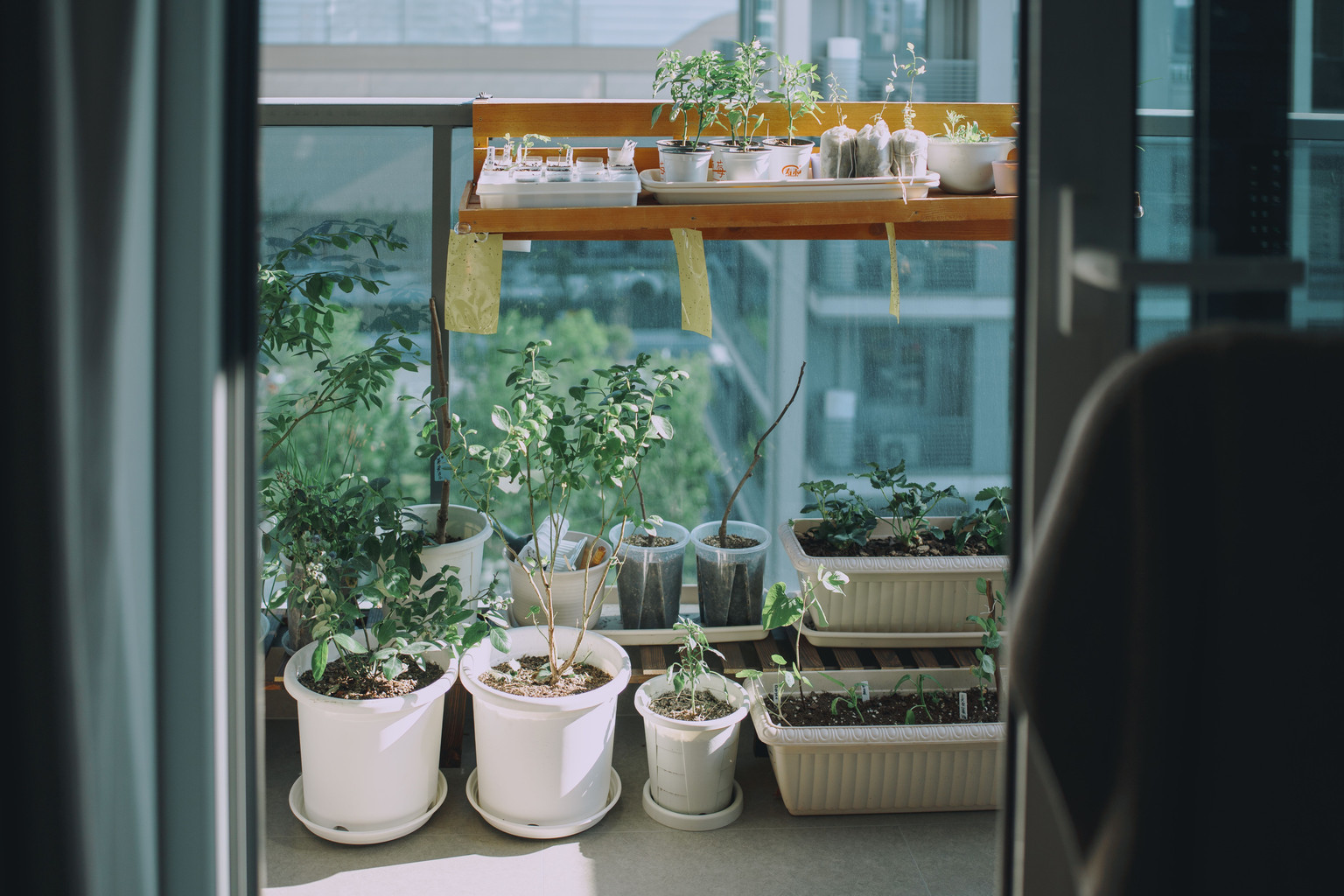

A forecast of strong wind or storms can leave you deciding what to secure first in a container garden. Make those decisions early, while conditions still allow safe access, and start with loose items that can be put away.
Move planted containers only when you can handle them safely. Follow official alerts, and stop for shelter when a warning calls for it or you hear thunder. The checks below cover early preparation and inspection after safe access returns.
Check The Forecast And Plan Early
Check your local forecast and official alerts before moving anything. On a high-wind or severe-thunderstorm watch, put away loose items before wind picks up, while conditions are still safe.
Decide which pots you can move safely and where they could go. For everyday balcony placement before a storm is in the forecast, see How To Plan Containers For A Windy Balcony.
Put Away Loose Items First
Start with empty pots, bags, trays, hand tools, watering cans, and other loose accessories. Put them indoors or in an appropriate storage spot before wind picks up. These small items can blow or slide into windows and walkways, and they are usually quicker to handle than planted containers.
Move only the planted pots you can carry under control along a clear route and into a permitted place. A planted pot can weigh much more with moist mix than it did empty. If moving one would require an awkward lift or climbing, leave it in place. While conditions remain safe, arrange appropriate help or ask the planter maker or property owner about a permitted way to handle or relocate it. If conditions turn unsafe before that is resolved, stop and shelter.
Check Pots, Supports, And Drainage
Read the instructions for the planter, stand, wheels, support, or temporary cover you already use. Look for loose or broken parts; a quick look cannot show that a setup is rated for storms. Do not add weights or tie garden equipment to a railing.
Check that the container’s designed drain or overflow is open. An ordinary saucer catches runoff; a self-watering planter uses a reservoir as part of its design. Clear only accessible debris when conditions are safe and the product instructions allow it. Do not tip a heavy pot or drill into a container with an unknown design.
Stop When Conditions Turn Unsafe
During a high-wind or severe-thunderstorm warning, go inside a sturdy building and move to an interior room or basement. If you hear thunder, stop outdoor work and go indoors right away, even if rain has not started. Leave the last pot, cover, or tool where it is.
Do not use an open-sided patio as lightning shelter or assume that a plant storage area is suitable shelter for people. Choose human shelter according to official guidance, separately from where you put the plants.
Wait For Safe Access
Wait at least 30 minutes after the last rumble of thunder before returning outdoors. That wait addresses lightning only. It does not clear continuing wind, flooding, unstable objects, damaged structures, downed lines, or official restrictions. Keep following local updates, stay away from downed power lines, and use caution around debris after high winds.
Do not wade through floodwater to reach containers or enter a flood-damaged building before authorities give the all-clear. Floodwater is different from rain collected in a saucer and can carry contamination you cannot see (flood safety guidance). If floodwater reached edible plants or their potting mix, hold off on harvesting or eating from those containers and ask local Extension or the appropriate food-safety authority for guidance about the contact. Do not treat washing as proof of a safe harvest.
Check The Garden Before Watering
Once access is safe, scan the garden from a safe position before approaching the pots. Look for displaced or cracked containers, loose supports, blocked drains or overflows, leaking watering equipment, broken stems, and exposed roots. Remove small, harmless debris only when it is safe. Keep damaged equipment out of use until a safe repair or replacement is available. For plant damage you cannot assess, note or photograph it from a safe position and ask local Extension for crop-specific advice.
Check the potting mix below the surface before watering. Rain may miss a sheltered container, while another pot may stay wet. Do not water automatically because a storm passed or skip watering just because rain was forecast. Use the regular moisture check in How To Water Container Vegetables Without A Fixed Schedule to decide what each pot needs.
A Simple Storm Checklist
This filled example connects an observation with an action and a next step. It is hypothetical, not a test of storm protection or plant recovery.
| When | Observation | Action | Next Step |
|---|---|---|---|
| Early, while conditions are safe | A watch is posted; an empty bag and watering can are loose; a small herb pot is easy to carry. | Put away the loose items and move the pot to its planned, permitted spot. | Keep the exit clear, check the designed drain or overflow, and continue monitoring alerts. |
| Early, with a pot or support that cannot be handled safely | A large planted pot is too awkward to move, or its support is damaged. | Leave it in place. Arrange appropriate help or check the planter maker’s or property owner’s guidance while conditions remain safe. | If it cannot be moved safely before conditions turn unsafe, stop and shelter instead of attempting a last-minute rescue. |
| Warning or thunder | Garden work remains unfinished. | Stop and go indoors to suitable shelter. | Follow official updates; the end of rain alone does not mean it is safe to return. |
| After safe access returns | One pot has wet mix, an ordinary saucer holds rainwater, and a leaf is torn. | Check for hazards first, empty the saucer only if safe, inspect the container, and skip automatic watering. | Check the mix again before watering. If floodwater touched edible plants or mix, hold harvesting and eating and seek local Extension or appropriate food-safety guidance. |