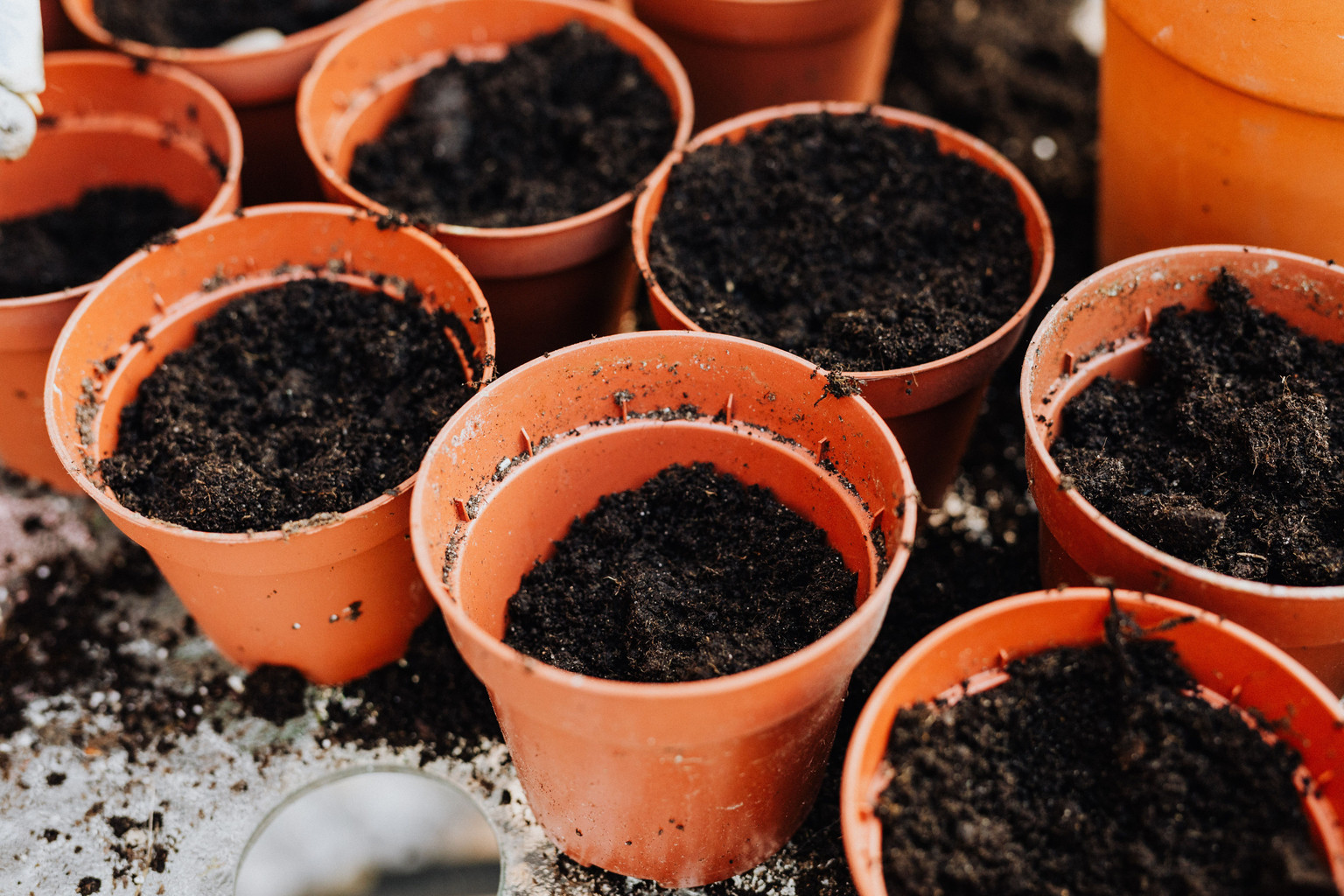

After planting, the empty nursery pots can leave you with a new question: which ones should you keep, and where can the rest go? Reuse, nursery take-back, and recycling are possible routes, depending on the pots and the receiver.
Sort them by material and form, then confirm the current local rules before filling a bin or loading the car. A resin code, color, retailer name, or old online list does not establish acceptance. The checks below help you find and prepare for a confirmed route.
Sort Pots By Material And Form
Separate plastic nursery pots from trays, cell packs, hanging baskets, and other planters. Keep ceramic or terracotta, metal, and fiber or plantable pots out of an assumed plastic-pot route. Programs may handle each category differently. If a plant is still growing in its pot, use the nursery-start transplanting guide before treating that pot as empty.
Record any visible material code, color, shape, size, condition, and how many pots you have. Treat an unmarked pot’s plastic type as unknown instead of guessing. A resin code identifies the plastic type; it does not tell you whether a local hauler or drop-off accepts that pot. Check your city or county, waste hauler, or receiving program for the exact pot and bin. The EPA’s recycling FAQ explains how to find local options and why some recyclable-looking items are not accepted.
Decide Which Pots Are Worth Reusing
A sound pot can be reused when you have a real use for it or a recipient who wants it. If you are deciding whether an old pot suits a particular crop, see the container comparison guide. Keep pots from plants with a disease problem, or with an unknown preparation history, apart from ready-to-use supplies.
Cleaning and disinfection are different steps. Cleaning removes visible soil and plant debris; it does not by itself disinfect a container. Use directions that match the pot and plant problem before growing in it again. The container cleaning and disinfection guide explains that distinction. A quick rinse is not proof of disinfection; do not improvise a bleach, vinegar, or other chemical mix.
Check The Receiving Program Before You Go
Check these routes for your area:
- City or hauler pickup: Look up the current item list for your exact service area. A general “plastic” category may not include nursery pots.
- Nursery or garden-center take-back: Check whether the specific location accepts your pot type, and whether it reuses pots or sends them for material recycling.
- Dedicated drop-off or collection: Confirm current dates, accepted items, preparation rules, and access before traveling.
Retailer pages can point you toward a program, but they do not confirm what a particular store takes today. The Home Depot’s Eco Actions page, dated November 2021, describes a garden-center collection rack and a reuse-and-recycling partnership. Check the exact store’s current program and pot rules before making a trip. Lowe’s Store Services page lists plastic planter pots at in-store recycling centers and says services vary by store, so confirm with the location you plan to use.
If no route is confirmed, keep suitable pots separate for a verified reuse or collection option, or follow your local waste authority’s disposal instructions. Do not put them in a recycling bin on a guess or leave them outside a business.
A Local Nursery Example In Snohomish
Flower World in Snohomish, Washington, gives one example of how specific a receiver’s list can be. Its published page, checked October 20, 2026, describes two on-site collection bins: one in the parking lot west of the retail greenhouses and another on the service road. It says it tries to reuse accepted containers in its potting program. This is take-back for reuse; the page does not say the pots are processed into new plastic. Check current directions and access before traveling; collection hours are not confirmed.
The full accepted-pot list includes pots purchased at Flower World and distinguishes shapes and pack sizes. It lists rectangular and spacer flats for 4-inch pots but excludes square flats; it lists 4-packs but not 6- or 12-packs. It has separate rules for size, color, and branding, so compare your pots with the list before going.
Prepare Pots For The Route You Confirmed
Preparation depends on the recipient. San José’s planter guide separates ceramic and terracotta planters and metal planters from plastic nursery containers. Its nursery-container recycling page says to shake out excess dirt. For nursery reuse, North Coast CNPS’s pot instructions tell donors to wash pots before bringing them to its nursery, where the nursery handles sanitizing. These are different local processes, not universal cleaning rules.
Before loading, confirm which types and quantities are accepted and what to do with soil, roots, labels, hangers, damaged pieces, and nesting or stacking. Check the drop point, hours or collection date, access rules, and any appointment or fee. Follow the receiver’s confirmed preparation rules for collection. For planting reuse, follow the separate cleaning and disinfection guidance above. If the receiver declines an item, take it with you and use another confirmed route or local disposal guidance.
Use This Short Program-Check Script
Contact the program with the details of the pots you have:
Do you currently accept these nursery pots: [material or code, if marked], [color], [shape and size], [condition], and [quantity]? Is the program for reuse or material recycling? What should I remove, empty, clean, or sort? Where and when should I bring them? Are there size, quantity, appointment, or fee limits?
Save the program name and page or contact, the date you checked, accepted items, preparation steps, drop point, and any unanswered questions. Keep any unconfirmed pots out of the recycling bin until the local authority or receiver gives them a route.